The depiction of how I used Brian’s essays to further explain my identity but to also grow and expand on my English skills. Coming into college for the first time I was nervous writing this portfolio because I was never good at writing essays in high school and always dreaded it. However, when I came to college that narrative changed and I really enjoyed writing essays because of the topics we wrote on. The idea’s really challenged me, not because of the difficulty of the writing but the concept of what to write and how to explain my identity to other people. Over time the writing became very comfortable, especially after completing Brian’s supplementary class assignments because it gave me insight on what to write about every assignment. Overall, I really enjoyed the class and learned new writing styles and planning techniques to help me write more papers in the future.
Sociological Perspective
People often express dissatisfaction with the routine aspects of their lives; however people do not recognize the societal factors and social forces that contribute to the discontent they are experiencing. Sociology is the “study of social life, social change, social causes, and consequences of human behavior. ” It is important for society to understand the study of sociology because it reveals a broader perspective on how society functions, and can also reveal the connection to the discontent people are experiencing. Keeping a sociological perspective can be beneficial in my present and future life because it allows me to obtain societal awareness, appreciate lifestyle, build connections, and problem solve.
Having a sociological perspective is useful because it allows me to recognize societal awareness, which helps me widen my perspective on how society shapes my life. By analyzing and applying historical events and social factors towards my life; it improves my understanding on why society encounters such significant problems which I can connect to my personal matter. In C. Wright Mills’ essay “The Sociological Imagination”, Mills argues how people need to gain awareness of their position in society to better understand how their problems originate, “The idea that a individual can understand her own experience and gauge her own fate by locating herself within her period”. Mills summarizes how peoples problems are common and can be connected back to history; however by understanding their position in society will help better identify the causes to their experiences. Mills’ introduces the topic “sociological imagination”, which to most sociologists means to broaden perspective to recognize the larger societal structure of viewing personal problems, to help encourage an individual. Integrating the “Sociological Imagination” into my life can boost my societal awareness and can benefit me in the present and future because I have the ability to connect my personal affair to society’s affair to help better understand the causation to my issues. It also benefits me, rather getting caught in the mix of society and retaining a negative mindset due to personal problems; to appreciate my lifestyle because “Sociological Imagination”, advocates for optimism and learning experiences.
Retaining a sociological perspective contributes to my present and future life because it allows for me to appreciate my lifestyle while connecting to societal factors that negatively impact certain groups of people in society. Most people will look at society and depict between what is “normal” and “not normal”, however by looking past a first judgement, and finding out why certain groups in society commit to actions that do not deem “normal” to most people, helps me better understand my place in society. An example comes from the “Invitation to Sociology” by Peter Berger. Berger mentions how sociologists will encounter activities which can expose truths about how other human societies function. An example of this was of when explorers first encountered cannibalism. It gave “culture shock” to them but there are now new discovered, “unsuspected facets of human existence in society.” During the time period when European explorers came to the Americas, they saw how Native Americans ate people and were shocked, however as Europeans analyzed that there was less development in the Americas compared to Europe agriculturally, it had made sense to them on why cannibalism occurred. Reflecting on this historical event shapes my positivity today; by realizing that there are people in today’s society do have access to proper nutrition, helps me remain content and humble for whatever resources I have. Retaining a sociological perspective is useful to me because I am able to positively register my place in certain communities within society; for future reference keeping a sociological perspective can help build connections by opening up personal views and sharing personal experiences on a common ground.
Keeping a sociological perspective is beneficial to me because by following the mindset of having “sociological imagination”, I am able to share a broad perspective to other people and build connections by sharing my beliefs and experiences. Understanding social patterns and building awareness is essential for building connections. A personal connection I experienced in the past, was being the only person in my high school friend group with zero knowledge of the sport basketball. By understanding my awareness of the connection I had with my friend group, I found motivation to start watching and playing basketball with the intention to build a deeper connection with my friend group. Over a long period of time; analyzing and practicing; I was quick to creating experiences with my friends and producing some of the greatest memories I’ve had with that group. I was able to carry my skillset to different basketball courts which allowed me to create more connections by sharing my past of the sport, while learning other people’s pasts.Though, I came through a lot of problems while learning about basketball because learning a new craft can be difficult; retaining the sociological mindset assisted me to building connections and to problem solve the issues I was facing.
Possessing a sociological mindset has benefited me by diagnosing and solving problems; benefiting me to push for greater change in society. By recognizing patterns of singular cases in society, it has allowed for me to critically think on how to push forward towards the negative societal patterns. In Emile Durkheim’s “What is a social Fact”, Durkheim states, how social facts are ways of how individuals act and think to feel external to the world. Durkheim also mentions how people have to adapt to the customs developed in life before them, “I am not forced to speak French with my compatriots, nor to use the legal currency, but it is impossible for me to do otherwise”. Certain documents like the law, force us to commit to certain actions like, using the proper currency to pay, shapes society because these practices allow for society to progressively advance. However, by retaining a sociological mindset, recognizing these societal factors encourage society to critically think of the causes to their questions. I am able to push for greater change in society by pushing the people around me to critically think about their point of view in society, to educate and inform them. The critical thinking trait then will passes from person to person creating a societal change of perspective.
No society is perfect, however there are many ways we as a society can push to be the best version of ourselves. By keeping a sociological perspective, it can allow for us to keep social awareness, appreciate lifestyle, build connections, and to problem solve within our community which can shape us to pursue significant achievements.

Ethics Basketball Players Need
Having the “perfect” essence of basketball is nonexistent for any individual to pertain. One saying NBA head coach Doc Rivers lives by is, “You win by effort, by commitment, by ambition, by quality, by expressing yourself individually in a team context”. This idea reflects basketball’s deeper ideology, Every person is limited to a certain extent; individuals may face physical or mental limitations however, through connection, collaboration, and perseverance achieving a collective essence in basketball is possible. This essence is not just shaped by teamwork, but also shaped by culture. The culture surrounding the basketball community influences how players see themselves, creating shape in their identity and beliefs. The essence of basketball players are shaped by many components including the history of basketball, the strategic language, popular influences, and cultural artifacts.
The history of basketball connects to the essence players carry today because it laid a foundation of the game’s early development, and through hard work and unity; basketball was able to transform to its current culture and style of play. Basketball was created in the winter of 1891 by physical education teacher James Naismith. Naismith created a base of having 13 rules for the sport by remixing other ideas from other sports like lacrosse and soccer. Naismith was inspired by how both sports used a ball and had players in teams transitionally moving on one field, split into halves with identical lining. American football was another sport he looked at but despised the aggression it had; his inspiration while creating basketball was to unify kids in the YMCA institution by creating a game to play indoors during winter season. The first game of basketball was played by 18 students of Nasmith’s in a YMCA network game. College magazines gained notice and publicized the sport by publishing their reactions and thoughts for basketball. The sport rapidly gained popularity into new college institutions throughout the U.S and globally. As societies around the world adopted basketball, this allowed for basketball to become an olympic sport in 1904. Eventually in the U.S, a group of arena holders founded the most popular basketball association in the world today, the NBA in 1946.
During the formation of the NBA in the 1940’s, the league was small but players were willing to commit to a new practice. The NBA had not financially expanded yet, causing an insufficient amount of funds which made players work regular jobs in the offseason. Most players were white males; during the 1950’s the racial barrier broke by having 4 black men join the NBA in 1950, which allowed people of color to participate without racial backlash. In the 1960s, basketball was starting to incorporate teamwork by using communication and fundamental skills like passing, shooting, and dribbling to score points. During the 1970’s-1990’s the fundamentals were understood, and an increased number of players joined the association creating an equal number of teams which provided a structure on how to track documentation such as wins/losses and personal records. Rivalries were formed, creating a strong culture in the basketball community. Popular influences were essential to helping the NBA expand its ideas.
The NBA used star basketball players like Micheal Jordan, Larry Bird, and Magic Johnson to construct marketing strategies like endorsements, merchandise, and the expansion of television deals to help expand the essence of basketball. Not only the NBA, these stars helped carry basketball culture back into communities globally through media appearances, playing exhibition games globally, and expanding brand deals abroad.Today, basketball is played globally with people of all backgrounds, reflecting the purpose of Naismith’s vision of unity. Basketball is the third highest growing sport in the world, and basketball leagues across the world have formed over time. The NBA today has its highest number of foreign players in league history. Players today embody the history of basketball by following the same evolution legends and icons had to go through, following the structure of learning and evolving the game of basketball while being disciplined and resourceful. Players today have a chance to incorporate the essence of historical basketball trends into their daily lives, due to NBA icons that paved the way for the future of the sport. As basketball is continuing to evolve, it is important to highlight how essential communication is for players to be successful on and off the court.
Strategic language on and off the court is essential for basketball players because on the court it allows for players to learn and adapt new maneuvers while playing, and can help build connections off the court. Basketball players today use language as an essential to communicate with one another to be able to express actions and strategies. There is no difference in official language being used, but the terminology within the sport differentiates within other subcultures. Over time, basketball players have created hundreds of terms to help facilitate the language of a basketball game, however verbal language is not the only language being used by players. In team basketball, players also use visual communication to indicate cues, making it more difficult for opposing teams to understand mid-game adjustments. These visual cues have also led to the identification of naming specific basketball moves. Learning these skill moves can ignite a player’s cognitive skills, determining when to use a certain move within a basketball game.
Players also need to use their cognitive skills while strategically communicating with people to deal with building connections. Professional players have many different scenarios where their communication can determine the extra incentives they are capable of getting within their careers. Athletes can get up to hundreds of millions of dollars based off of their skillset, but that number can plummet if an athlete’s not media trained. It is principal for players to be media trained since poor language can lead to misinterpretation and a negative public image by the basketball community. Younger aspiring athletes should be obligated to proper communication to be able to communicate with coaches, scouts, and their own teammates in the locker room. Players are able to build relationships, represent themselves professionally, and to aspire to a leadership role. Carrying communication traits as a basketball player is essential to the essence of a collective basketball player, and many traits can come from popular influences within basketball.
Popular influences on basketball are mostly professional basketball players adopting a certain aspect/trend of the game which changes how the sport is portrayed by the community. Prime example, NBA player Stephen Curry. Prior to him being drafted in 2009, shooting a 3 point shot was not as marketed for basketball players, but because of Curry’s ridiculous ability to shoot the basketball from such far distances, it made the typical basketball player adopt the skill of shooting 3 point baskets to be able to compete at a more dominant level. Former NBA player Matthew Delllavedova had stated, “No one person can stop Curry, he is just so hard to guard because he never stops moving.” His teammate J.R. Smith had also stated extreme physical pressures Dellavedova had to put himself through while attempting to guard Stephen Curry during the 2015 NBA Finals. Stephen Curry collectively has had the greatest impact on the sport of basketball, due to his effective 3-point shooting. His shooting ability has caused defenses to scramble and has caused the entire world to play differently incorporating Curry’s techniques at all different levels of basketball. Just this one superstar influenced the entire essence of a basketball player to adapt to the new changes of basketball caused by a popular influence, due to Curry’s dominance many fans have been influenced to buy his jersey, but not only his jersey; as well as his competitors.
Basketball jerseys are a timeless artifact, they show historical and global influence. During the past NBA season, superstar Luka Doncic was traded to the Los Angeles Lakers and there was a global buzz throughout the basketball community. His new jersey shows impact on the essence of a basketball player because it was the most bought NBA jersey last season. The jersey impacts the essence of style because basketball players and fans want the newest edition of the most popular jersey at the moment. Doncic being from Slovenia; his jersey being popularized shows the rise of global basketball players and the impact on how apparel can be significant for the basketball community.
Basketball’s history did not only shape the sport, but also defined what the morals and ethics a basketball player collectively has. It is essential for players to carry proper communication, resilience and passion for the sport. The essence is not only in how the game is played, but how the players carry it on and off the court.
Racial Inequality’s Effect on Society
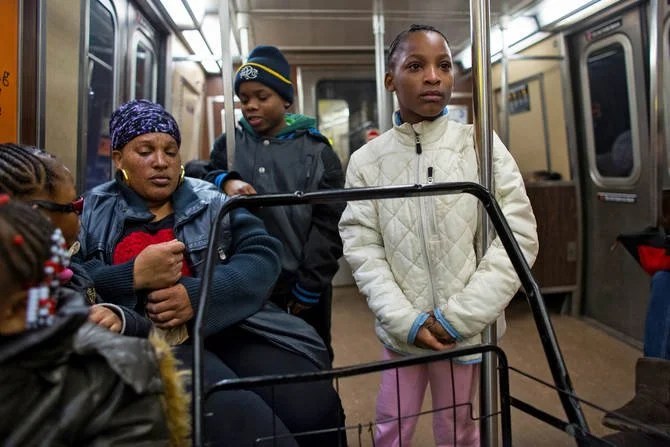
In 2023, 13.5% of US households faced food insecurity, and the homelessness rate rose about 18%. For Dasani these numbers aren’t statistics, but reveal her daily reality. In Invisible Child by Andrea Elliot, Elliot narrates the life of an eleven year old named Dasani and highlights how she is systematically rejected and battles with homelessness in New York City. Her societal struggles are not only shaped by her personal household struggles; also by structural forces. In Invisible Child, each social theory- Conflict Theory, Structural Functionalism, and Symbolic Interactionism – view racial inequality, slightly differently, and they each explain the root causes and solutions to each issue quite exclusively.
Conflict Theory is illustrated in Invisible Child by highlighting structural inequality and unequal power dynamics that shape Dasani’s life. Dasani living at a homeless shelter in New York City; while blocks away her classmates come from some of the wealthiest families in the city, highlight the competitive struggle Dasani and her family go through to compete for resources- secure housing, proper nutrition, and proper education. City institutions dictate their citizens’ power and control to maintain social order in society by continuing to benefit the wealthy and to keep people in poverty powerless. The societal social order also negatively affects Dasani and her family due racial inequality arising as a source of conflict to discriminate and marginalize people based on race and class. Institutions like Dasani’s shelter and school restrict mobility in society for Dasani by racially discriminating and shaming her; city institutions were encouraged to enforce stricter rules upon Dasani because she is an outlier in her society, and want to keep her family powerless and within the social hierarchy.
After looking at how conflict theory reveals the distribution of power around Dasani, Structural Functionalism offers another perspective about how institutions fail families in poverty like Dasani’s. Structural functionalism argues how government ran institutions are supposed to help society by maintaining structural order, but in Invisible Child these institutions go against the common belief; exposing children to physical and mental danger. One of the main institutions that opens mental and physical danger is the Auburn Residence, a homeless shelter Dasani and her family live in. The shelter is fearful and unstable, having small rooms and crumbling structures that appeared to have mold, “When Auburn’s staff members visit room 449, they seem more eager to scold than help” (Elliot 23). The people within the government institutions aren’t focused on creating societal needs rather faulting Dasani and her family for not improving the already poor living conditions. Another institution that opens fear for Dasani is her school, Susan S. McKinney Secondary School of Arts. School is labeled as a factor to help in society, but for Dasani it caused more destruction rather creation of opportunities. Dasani would be belittled by teachers and classmates because of her social status,.
While Structural Functionalism reveals how government institutions affect Dasani’s life; Symbolic Interactionism helps reveal the everyday social interactions that shape the negatives that occur in Dasani’s life. Dasani learns how to adapt In Dasani’s homeless shelter the Auburn Residence, “Dasani is her mother’s daughter, a fearless fighter. But she is also an easy target” (Elliot 11). Dasani has gone through a significant amount of adversity in her life causing for her to have a strong and powerful personality, but the amount of power she holds within her personality, is irrelevant to the amount of realistic power Dasani and her family have. Shelter guards treat Dasani and her siblings with disrespect by belittling them by implementing strict surveillance and control while watching the kids. Dasani also faces racism in school by teachers using unequal treatment. societal factors have been implemented on to teachers by creating an assumption that poor kids of color are seen as problems instead of potential. Dasani gets punished faster than other students although committing the same action. The students that are white and come from wealth are positively reinforced by teachers for their faults, rather Dasani is shamed and bashed for those some faults, and teachers speak to her with a condescending tone, showing irritation and judgement. Dasani faces racism through constant stereotyping and unequal treatment by people within her society, forcing her to develop a significant amount of mental toughness and self-awareness for her age.
To fully understand Dasani’s journey about racial inequality in Invisible Child, it is essential to learn about what Conflict Theory, Structural Functionalism, and Symbolic Interactionism are, and how they are implemented within society. Like Dasani, many children in the United States are struggling with racial inequality, and it is our job as citizens to advocate for proper resources and institutions to positively reinforce structure into children’s lives today.

Perspectives that Craft Identity
In the words of Hei Van Orde, “identity is something we can’t just inherit but we gain through interactions in society.” Identity is shaped and challenged through experiences. Personally, my identity has formed through ongoing interaction with my friends, family, and teachers in addition to interactions in social institutions like school, the gym, and through sports. As I look at my identity through the past, present, and future perspectives, it is uncertain that the shape of my identity is being viewed by only perspective, rather the three major sociological theories- Functionalism, Conflict Theory, and Symbolic Interactionism offer a deeper meaning of how my identity has evolved through social environments. Each theory provides and highlights different aspects throughout my life that have impacted my identity development. The three agents of socialization clarify how my identity was shaped by highlighting the major institutions that prepared me, my social class, and daily interactions.
Reflecting at my upbringing, I noticed how different environments introduced me to new behaviors, ideologies and beliefs that contribute to my identity today. Functionalism describes my identity by showing how societal institutions prepared me to accomplish stable roles for myself and my community. My household served as the primary foundation to shape me into a functioning member of society; they introduced me to the morals and etiquette of respect, responsibility, and discipline. My parents went through hardship; both immigrated from Afghanistan to the United States in the 1980’s- 90’s due to conflict from the Soviet Union causing war. Both parents also grew up under the influence on Islam and their families were religious. The rough/religious lifestyle called for strict parenting; living in a war-torn nation called for discipline and sharp behavior to ensure security for my parents’ health and future. Their hardship created perseverance, which was imposed on me growing up. However, my parents were very constructive and helpful while raising me. I asked my mom why she had made changes to how I was raised compared to how she was raised, “I want you to carry similar traits we had that made us collectively solid human beings… Being humble and mentally strong will take you a long way; but at the end of the day, we want you to have your own identity but carrying those traits will make you a collectively better human being.” The discipline and mental strength my parents emphasized created a foundation for how I approach different environments like the gym. I have been playing basketball at my local gym for the past three years and the fundamentals my parents inflicted on me translated well to communicating with people at the gym. Retaining a humble but communicative identity at the gym has allowed me to participate in the gym’s environment in a healthy and structured way. In many ways I have expanded my identity by meeting and talking to new people; learning and exploring different perspectives of society enabling me to craft a flexible identity. Learning about the different perspectives of people allowed me to be open minded; the process of communicating with people became easier which allowed me to build trust, connections, and the ability to avoid conflict.
Through Functionalism, I see how these institutions built my Identity in ways that allowed me to grow into a functioning member of society.
Retaining a functionalist perspective also helps me understand the person I aspire to be in the future; especially as I am working towards a career in dental hygiene. In allied health, society depends on certain individuals who can educate and provide proper service to the public. The values my family and gym taught me- discipline, responsibility, and respect, earlier in my life are shaping my motivation to enter the dental field. Currently my motivation for completing early work experience and pre-requisite classes for the program are driven by the motivation of my parents coming from hardship; I have always had that motivation to become a “someone” in society and to make my parents proud. My focus and commitment to education, self improvement, and dedication are gearing into building strong habits, which can form into becoming a beneficial part of society. Ultimately, functionalism reveals how the expectations of institutions and the structure of my allied health goals guided me through creating new aspects of my identity and shaping my goals to become a dental hygienist. However, my identity and career goals are not shaped by just societal institutions; Conflict Theory discloses the navigating inequalities and limitations that influenced my identity over time.
Conflict Theory argues and exposes the challenges and inequalities my family and I faced while I was growing up which contributed to my current identity. Conflict Theory claims that society is built upon unequal distributions of power like social class, race, and wealth. With my parents coming from Afghanistan; they had to build their social status with just a slight amount of power. My mom attended most of her schooling in the United States throughout the 90’s; nevertheless, it was quite a challenge for her. Not understanding English and coming from little to no amount of money were some of the many obstacles she had faced to reach her goal of finishing school to become a functioning societal member. Her influence furthered my ambition; realizing the inequalities she went through influenced how hard I have to work. My mom worked her way up in society by maintaining three jobs and providing for me and my family. I have come to the realization there will always be people with a higher social status and that come from more wealth leading them to have more societal power than I do. In opportunities for myself, I had always noticed certain competition I had faced throughout my time playing basketball at the gym, certain players received more resources, training, and recognition throughout their time playing basketball only because of their family’s social status, and not just by their skill. Conflict Theory helps me comprehend that power isn’t necessarily given but earned, coming through a family where not everything was given pushed my motivation to improve academically, physically, and socially. My identity today includes a strong sense of determination because by understanding Conflict Theory, I shape factors that occur in my life towards my identity to help me persevere overcoming obstacles and challenges throughout my life.
Building on how these inequalities shaped my mom’s past also will continue to influence how I interpret my future, especially when I think about eventually having a future family. Conflict Theory also helps me understand how inequality shapes the kind of future I want to create for my family.I recognize that no society can guarantee a perfect social status for every individual; however, I strive to provide my future family proper social status and to not face the same struggles my parents and I faced. Conflict Theory further argues how people should respond to structural inequalities by obtaining resources, stability, and power, and this ideology further reflects my personal motivation to build a healthier and more secure lifestyle. Working to reach financial independence and creating a strong foundation of health will enable my future family to feel comfortable and secure instead of being stressed by the systematic pressures. This future goal will shape my identity and give a sense of purpose and direction that influences the responsibility towards the decisions I make today. Having the intention of working towards creating a better life for my future by prioritizing emotional maturity and resilience further reflects my growing identity and how I carry myself within my community. Fully understanding my identity is entirely about the systems I push against; it’s also about the small and daily interactions that shape how I see myself, in which Symbolic Interactionism explains.
Symbolic Interactionism describes my identity through small, everyday interactions, and comments. The conversations and social feedback I have received in my past, contribute and have taught confidence and influenced who I am today. Interactions with my friends and family between, my home, school, and the gym have all contributed to a change in my identity; by receiving feedback from each individual institution; I am allowed to learn and improve to form a stronger Identity. At home it is showing respect and integrity in conversations with my parents being able to add higher levels of respect into my identity. At school my interactions include more banter and friendliness, improving my confidence levels and sense of humor and adding it towards my identity. In basketball at the gym, I built my own personality through clothing style, body image, and communication techniques. Interactionism also helps me understand my identity changes as the settings around me change. Every environment shifts how I see myself and continues for my identity to keep evolving.
Symbolic Interactionism also shapes the identity I want to possess in the future. When I think about the person I want to be in the future; I think of a stronger, sharper, and more mentally stable version of myself. Every goal I envision of myself, is something I want other people to see me as in the future. I will continue to shape my identity based on the people I surround myself with and the future goals I will continue to form. I want to create an image for myself as someone who is: discipline, intelligent, and athletic through the interactionist perspective.
My identity is not defined by a single moment or a single environment, but by the combination of social forces that have shaped my past, present, and future. My family laid a foundation of how to form an identity, the gym helped me find and build confidence, and my goals are pushing me towards a positive future. As I move forward I’ll keep envisioning what I have learned in the past to form the strongest identity for my future self.

Societal Factors Downgrading The United States
Racial Inequality in the United States remains as a top social concern for citizens; racial inequality contradicts American values and morals by going against the foundational rights that built the ideology of the country. Society is being limited from reaching their full potential; reoccurring disparities: education, criminal justice, healthcare, and wage gaps are few of many subjects that have negatively been affected by racial inequality. Specifying the disparities is important because the consequences of inequality can negatively spread into: economic growth, propaganda in the media, and unequal opportunities. As a writer, I chose to incorporate academic language, analytical tone, and motivated purpose to communicate the significance of this issue.
To strengthen my focus on the topic, I found evidence from empirical articles, a non-fiction book I have read throughout the quarter relating to the social issue, and the class’ sociology textbook, and implemented evidence from these sources to build my argument. I have chosen my subtopics for my outline based on general areas where racial inequality is carried in society to illustrate how racial inequality harms opportunity, weakens unity within society, and limits national progress.
What are ways racial inequality negatively impacts American society?
Societal Factors Downgrading The United States
Racial Inequality continues to weaken American society by hindering economic development, reinforcing harmful stereotypical portrayals, and restricting equal opportunity for socioeconomic status.
Section 1: Negative Impact on Economic Development in the United States.
I. Rather functioning as one unified population, people within American society are divided upon racial and socioeconomic relations which weakens general economic development.
a. In Introduction to Sociology 3e, writers mention how certain countries are categorized based upon the amount of resources each nation has, “Familiar and still used by many, it classifies countries into first world, second world, and third world nations based on their respective economic development and standards of living…democracies such as the United States and Japan were considered part of the first world. The poorest, most undeveloped countries were referred to as the third world (Conerly, Tonja R, et al.).”
b. Interpretation/explanation: Immigrants that come from less economically developed countries often encounter racial discrimination that restricts the ability to obtain resources needed for upward mobility; but also hinder creativity, labor, and innovation, weakening economic development.
II. Topic & Point: Racial Inequality places individuals in disadvantaged situations, making it exceptionally difficult for mobility in economic development.
a. In Invisible Child by Andrea Elliot, Guards often scold and harass Dasani’s family because of the poor condition of their living space, “When Auburn’s staff members visit room 449, they seem more eager to scold than help” (Elliot 23).
b. Rather than addressing and supporting the weakness in the structural conditions that contribute to poverty, government institutions often blame groups of people with less resources for their living circumstances; reinforcing harmful stereotypes in society, which can hinder the amount of opportunities certain individuals get.
III. Examining how systematic barriers put certain Americans at a disadvantage.
a. In Inequality in America: Race, Poverty, and Fulfilling Democracy’s Purpose by Stephen M. Caliendo mentions how unequal structural barriers put certain Americans at a disadvantage, “Consequently, the belief that poorer Americans are largely responsible for their own financial condition has led to an unwillingness to address systemic barriers to greater equality. After all, if we do not believe it is broken, we will not try to fix it.” (Caliendo).
b. Interpretation/explanation: U.S citizens are responsible for their financial status however, unequal structural barriers place certain Americans at a disadvantage by limiting access to education, employment, and economic mobility putting certain Americans in fixed social ranks making it harder for economic advancement.
Section 2: How reinforcing harmful stereotypical portrayals contribute to the weakening of American Society.
IV. Stereotypes about racial/ethnic groups exist and reinforce negative narratives which can result in unequal treatment and can weaken unity within society.
a. In Introduction to Sociology 3e, the authors mention some of the common stereotypes assumed in U.S. society, “Cultural Racism occurs when the assumption of inferiority of one or more races is built into the culture of a society…A study showed that White and Asian American students with high GPAs experience greater social acceptance while Black and Native American students with high GPAs are rejected by their peers (Fuller-Rowell and Doan 2010).”
b. Interpretation/explanation: Cultural racism develops stereotypes, and when normalized these stereotypes are used to explain societal outcomes and create false assumptions and narratives on groups of people, which can lead to less individual success highlighting racial inequality.
V. People of less societal power are often more depicted by society.
a. Dasani’s financial situation has caused her to go through adversity creating a strong personality but her having less resources and power only makes her weaker “Dasani is her mother’s daughter, a fearless fighter. But she is also an easy target” (Elliot 11).
b. Dasani consistently gets stereotyped because of her financial situation and her race, Dasani is belittled by teachers by being punished severely more than other kids and bullied by her classmates because of the clothes she wears.
VI. Racial judgments create stereotypes which can cause people to be treated differently.
a. In John Iceland’s Race and Ethnicity, Iceland mentions how the effects of stereotyping exist, “Racial distinctions are real and meaningful to the extent that people are treated differently and experience different kinds of life experiences and outcomes, as exemplified by the historical record in the United States.” (Iceland).
b. Iceland is justifying that because of the differences in race, society assigns meaning to each race and society treats certain groups of people differently based upon those assumptions.
Section 3: How society restricts equal opportunity for socioeconomic status.
IV. Social status significantly shapes an individual’s opportunities.
a. Dasani is powerless because of her and her family’s social status in New York City (Elliot).
b. The societal social order also negatively affects Dasani and her family due racial inequality arising as a source of conflict to discriminate and marginalize people based on race and class, institutions like Dasani’s shelter and school restrict mobility in society for Dasani by racially discriminating and shaming her; city institutions were encouraged to enforce stricter rules upon Dasani because she is an outlier in her society, and want to keep her family powerless and within the social hierarchy.
V. Immigrants face discrimination because of their lack of power and knowledge in society.
a. In Introduction to Sociology 3e, the authors mentioned the tough assimilating process for immigrants. “ When faced with racial and ethnic discrimination, it can be difficult for new immigrants to fully assimilate. Language assimilation, in particular, can be a formidable barrier, limiting employment and educational options and therefore constraining growth in socioeconomic status. (Conerly, Tonja R, et al.)”
b. Immigrants often face discrimination for trying to assimilate because of their limited power and unfamiliarity with social systems and society.
VI. People of power hold more opportunities and limit people of less power.
a. In the American- Non Dilemma by Nancy DiTomaso, she provides an example of how black people are segregated, “Both the laws and the academic literature frame the complaints of African Americans in terms of their exclusion rather than in terms of white inclusion. That is, they focus on discrimination, by which they mean specific and intentional acts of exclusion of blacks by whites. But exclusion is a consequence of opportunity hoarding.” (DiTomaso).
b. DiTomaso argues how inequality is not only produced from direct acts of discrimination but also through unequal acts of distribution of opportunities, DiTomaso uses the example of white people “opportunity hoarding” meaning white people have the access and ability to obtain valuable resources.
Conclusion: Racial and class persist those with power control opportunities and institutions while marginalized groups face systematic barriers which contribute to the cause of racial Inequality in the United States.
Works Cited
Caliendo, Stephen .M. Inequality In America: Race, Poverty, and Fulfilling Democracy’s Purpose. (July 2014).
Conerly, T. R, Holmes K, & Tamang A, L (2021). Introduction to Sociology 3e. Openstax. https://openstax.org/books/introduction-sociology-3e/pages/1-introduction
Ditomaso, Nancy. The American Non-Dilemma: Racial Inequality Without Racism. (2013).
Elliot, Andrea. Invisible Child: Poetry, Survival, and Hope in an American City. New York, Random House, An Imprint And Division Of Penguin Random House Llc, 2021
Iceland, John. Race and Ethnicity In America, (2017).

